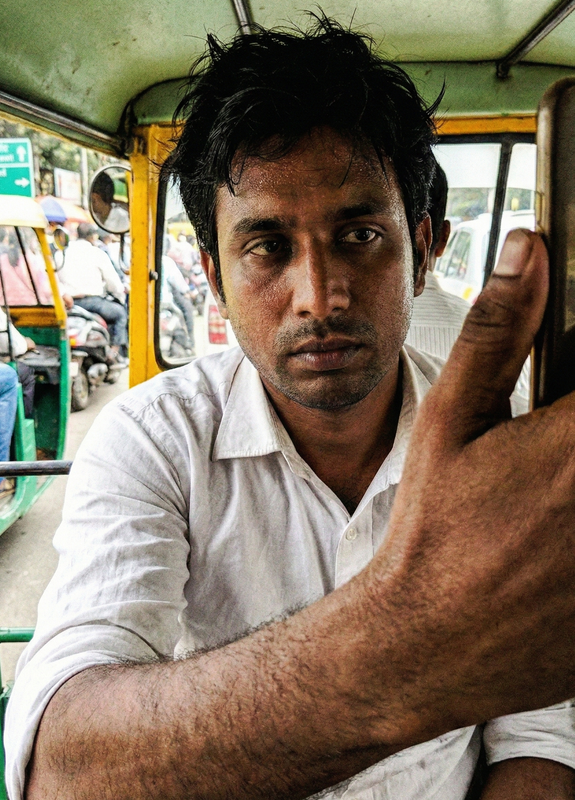
If you live in Bangalore, Mumbai, or Delhi, you know the performance. Every morning we put on a crisp ironed shirt, grab a plastic ID badge, and head to a glass office building, pretending life is perfect. But inside, we are counting every single rupee until the next payday.
By December 2024, I was 26. I worked as a "Senior Analyst" in tech support with a salary of ₹32,000. In life, that means a constant choice: pay for internet or save for mom's medicine? Take a taxi or rickshaw + metro again? Buy real food or "Maggi and tea, it's fine"? I ate Maggi for dinner way too often for it to look like an accident.
Where the money actually vanishes
I always thought the problem was my salary. But later I realized: the problem was also the chaos. When you're exhausted and emotionally drained, you start looking for "fast solutions": small side hustles, risky "tips" from acquaintances, or trying to "flip" capital while trading at night because "maybe it will work." I didn't think I was doing anything risky. I thought I was "just trying."
I had a main job. I didn't "dream of becoming a trader." I was simply looking for a way to add money without a second shift and without side hustles that kill your time and energy. Stories were flashing around constantly: someone "earns on charts in the evening," someone "figured it out in a week," someone "makes a profit on their phone in the metro." It sounded like a chance—especially when the salary disappears even before the end of the month.
I call it "the market" because that's what everyone said: the financial market—charts, currencies/crypto, trades on the phone. And I decided: okay, I'll test it on myself—I'll set aside a bit of savings for practice.
Those fateful 48 hours
Once, I allocated a portion of my savings to "practice" specifically because I wanted to understand: is this really a way to make extra money after work or just a beautiful fairy tale. It seemed to me that I would do everything carefully: try a little, see how it works.
But in reality, I fell for another piece of nonsense—confident words and "simple rules" that sounded too convincing: "everything is obvious here," "here is the signal," "now is the time," "the main thing is not to hesitate."
And here is what happened in just 48 hours:
- — I opened trades without a clear plan (it just "felt like it was going to move")
- — Reacted to every price movement, as if I was "obligated" to be on time
- — After a couple of successful entries, I increased the volume ("that means I understood it!")
- — After losses, I tried to "win back my own"—and only made it worse
- — Set almost no risk limit for the day
- — Listened to other people's advice and "signals" instead of stopping to think
At first, I lost a little, and that was the most dangerous part. Because my brain turned on: "I'll win it back now and return everything." Then I started sitting on my phone after work, at night, on edge, updating the chart every couple of minutes. Decisions became not rational—but emotional.
And by the end of those 48 hours, I had lost everything I had allocated for this "practice." The money I had saved and guarded just disappeared. Not "the market took it." I gave it away myself—because I had no discipline, and instead of a plan, I had a gamble.
The meeting that shifted everything
A few weeks passed. I had almost stopped thinking about "the market" and tried to just live: work, commute, home. The memory of those 48 hours would sometimes surface—like an unpleasant sound in my head—but I brushed it off. I convinced myself it was just stupidity. A mistake. And that it was better not to go there at all.
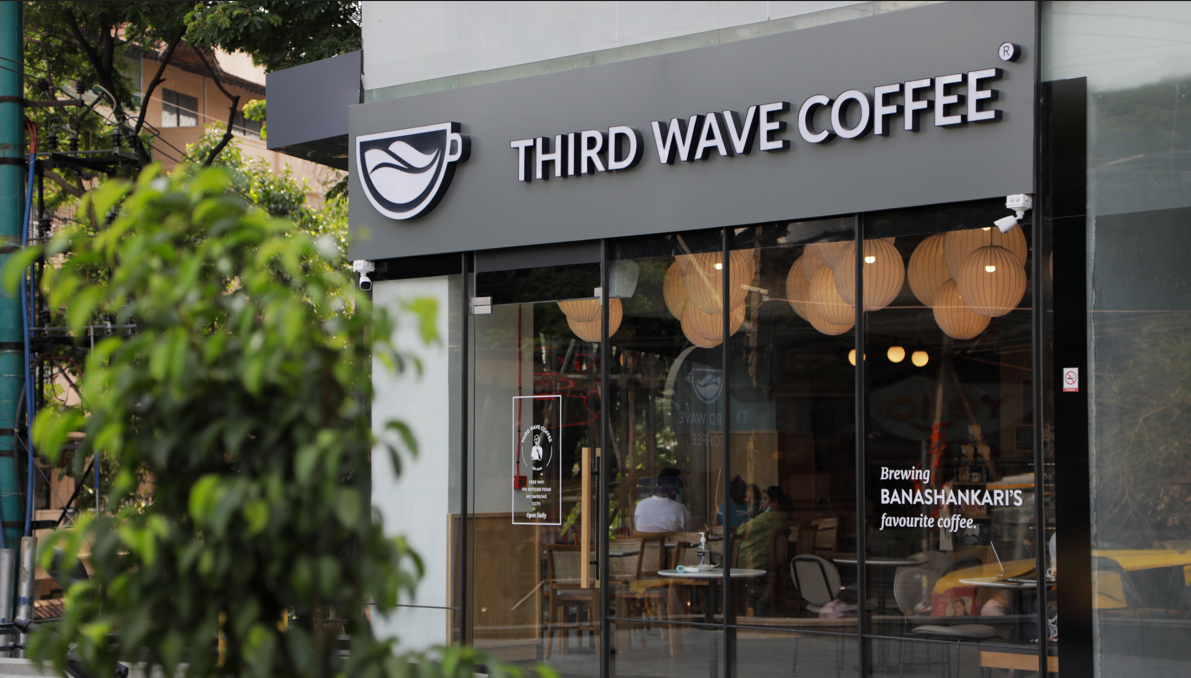
A rainy evening at Third Wave Coffee. I went in to hide from the storm, but I walked out with a plan to change my life.
One rainy evening, I stepped into Third Wave Coffee to wait out a storm. I was about to order coffee and bury myself in my phone when I heard at the entrance:
— "Arjun?.. Is that you?"
I turned around. It was Rahul—we studied together but hadn't seen each other in years. It was truly warm to meet someone from a "past" normal life where everything was simpler. We sat by the window. I ordered a basic coffee. Rahul—calmly and confidently—took coffee, a sandwich, dessert, and something else "to try," as if it wasn't even a question.
I was surprised. Not because it was luxury, but because my internal calculator automatically turned on: "So... how much does that cost? And why so much?"
We chatted about life: who works where, how we're handling the rent, how fast money flies in the city. Rahul asked how I was doing, and I answered honestly—in general terms: there's work, but it feels like you're always catching up with life.
He nodded and said something simple, without pathos:
— "You know, I lived in 'paycheck to payday' mode for a long time. And then I realized: you can live like that for years."
I chuckled:
— "You can. That's how I live."
Rahul looked at my cup and suddenly added, as if in passing:
— "At some point, I started looking for an option that doesn't eat even more time. Not a second job. But a system."
The word "system" somehow stung. I felt he was talking about something I had already tried myself—and failed. I didn't want to bring up the subject, but it came out anyway:
— "I was looking too. I thought I'd find a quick way out..."
Rahul didn't interrupt. And that made the confession easier.
— "I tried trading once... and very quickly realized it can be a dangerous thing," I said, trying to sound calm.
Rahul just nodded calmly:
— "I had the same experience."
I was surprised:
— "You blew it too?"
He smiled briefly—without shame and without heroism:
— "Yes. Because I treated it like a lottery. And then at some point it clicked: if you want it to work, you need to train like an athlete."
That word—train—caught me. Because for me, it was always either "lucky/unlucky" or "I'm smart/I'm stupid." And he was talking about the process. About discipline. About control.
WHAT HE EXPLAINED — SHORT AND CLEAR
Rahul didn't tell fairy tales. He said: "I needed an environment where I couldn't break the rules on emotion." He explained that DemoPips is a challenge format and simulator with risk management rules.
$69 — and they give you a $5,000 demo account for training.
I didn't understand it at first and asked point-blank:
— "So for $69 I get $5,000?"
Rahul corrected me immediately:
— "Not real money. It's a demo account—virtual $5,000. But you trade it as if it were real: with rules, limitations, and goals, but on the real market."
And that was the whole idea.
You pay $69 not for "money," but for a simulator where you are given a $5,000 demo account—to train on a normal size, but without the risk of losing your real funds.
Why it made sense to me
When a beginner trades with a small amount—it always turns into emotions:
- — "this is tiny, I can risk it"
- — "I'll win it back now"
- — "one more trade and I'll return everything"
But here is a different approach: you have a $5,000 demo account, but you cannot turn trading into a casino—because the rules won't let you.
Rahul said a simple thing:
— "A beginner doesn't need a huge real deposit. They need a routine and discipline. A $5,000 demo account is just a training ground to build a habit."
And for the first time, I felt that I was being offered not a fairy tale about "fast money," but normal training:
$69 → access to training → $5,000 demo account → discipline → Big challenges
I asked directly then:
— "Okay. Suppose I've learned to hold myself together. What's next?"
Rahul didn't start drawing fairy tales. He just showed the logic of the "next level":
- $5k — $69
- $10k — $149
- $25k — $299
And again he clarified so I wouldn't get confused:
— "These are all demo accounts. Virtual money for training. You pay for access to a format where you trade on the real market, but without the risk of losing your real funds—and where the rules keep you within the framework."
Why I started with a small level
I didn't want to fall into the "$100 Trap" of losing control again. I chose the $69 challenge to build discipline without the pressure of huge numbers. My routine was 60–90 minutes an evening: one scenario, fixed risk, and a daily limit.
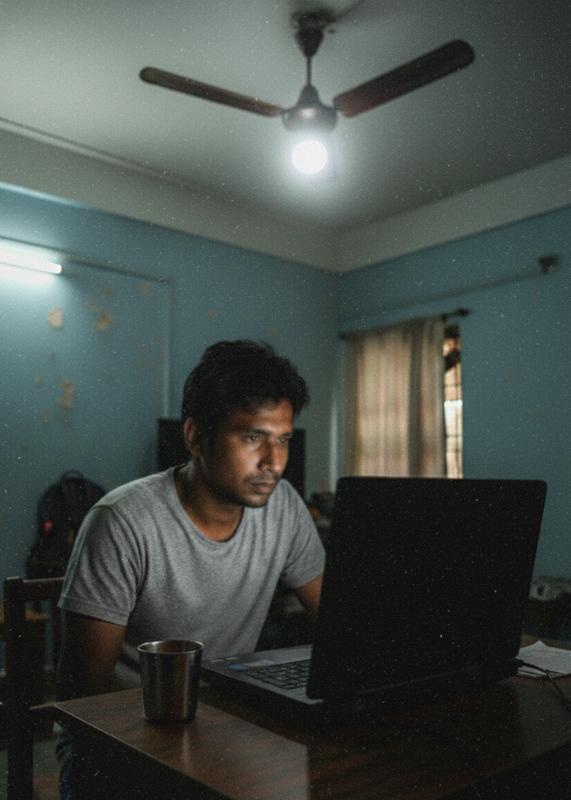
My "office" at 2 AM. I spent two weeks in the DemoPips training mode: you buy a challenge for $69, get a demo account, and trade by the rules. You don't "risk"—you learn to do everything perfectly right every day.
These weren't "cages"—they were frames that finally helped me stop trading with emotions. Like a gym: it doesn't limit you, it aligns your technique.
My progress step by step (no magic)
- Week 1 — Stopped rushing, learned to walk away on time.
- Week 2 — The trading journal showed the truth: my mistakes were repetitive.
- Week 3–4 — Became calmer: even a minus didn't break my process.
- Next — Once discipline was stable, I started thinking about growth.
Why I believed the people
I didn't want to take his word for it. Therefore, I went to check independent reviews. On Trustpilot, DemoPips currently has a 4.7/5 rating and about 77 reviews. Trustpilot is a public platform where reviews are verified by automated systems for suspicious activity. You can check it yourself:
First money — no movie magic
My first withdrawal was about $540. I didn't buy a car—that would have been laughable. I did what real people do: covered family expenses, paid off bills, and put a little in my emergency fund.
The big purchase came later—when results became stable, I saved for several months, and my father and I made a proper family decision. Last Diwali, we bought a Hyundai Creta together. He cried because he saw his son was finally a reliable support for the family.

The day I brought the car home. A quiet win for our family.
And yes — about the plans: why I eventually took more
When I realized I could follow the rules and repeat the process, I wanted to scale. That's when higher limits became logical: you start small to set the discipline, then move to $10k / $25k (or higher) when you know you can repeat the process. First skill—then size.
First real vacation
My first vacation in a long time was to the Maldives for a few days. Но для меня это было важнее любой картинки: я впервые отдыхал без паники в голове «как я закрою месяц».
Yes, eventually I went back to the Maldives—but that was not "cinema" or sudden luck. It was a short vacation I planned in advance and paid for from savings collected over several months.
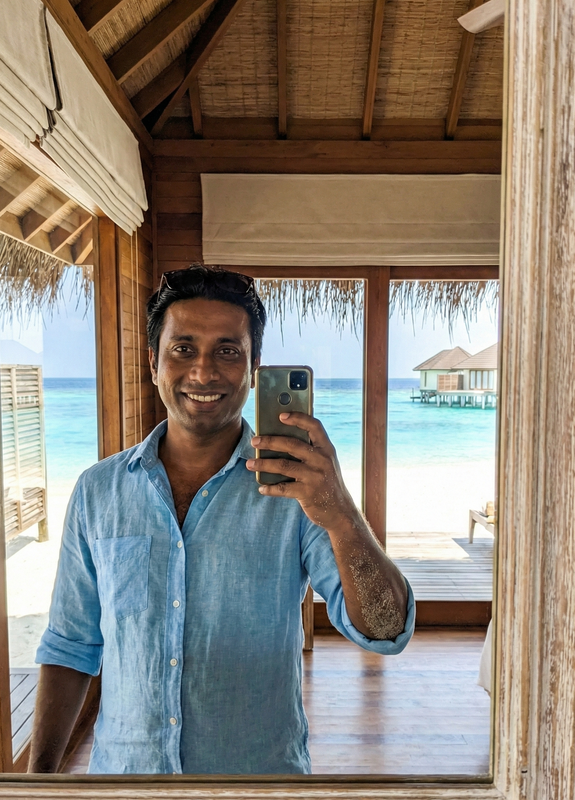
That moment in the Maldives. More important than the view was the fact: I paid for this myself, systematically, without debt. That is true freedom.
Ready to start a new life?
The $69 challenge — virtual $5,000 balance and rules that teach discipline.
REGISTRATION OPEN FOR INDIA
